Yes, of course most people's reaction to Martin coming out was, "DUH," and I think I even said something along those lines in conversation myself. But I thought about it some more, and two different issues came to mind:
1) In the U.S. we think of Ricky Martin as a two-hit-wonder has-been. But he's still incredibly popular in Latin America, where the politics of him being an out gay sex symbol occur in a different cultural context than it does in the U.S. Nobody has noted that in his self-outing blog entry, Martin first wrote it in Spanish and then in English. I really don't think white Americans were necessarily the audience he was primarily speaking to here, yet our reactions to his self-outing act as if we were, because, well, we're white Americans - that's what we do.
2) Intersecting with my previous entry's point about Anderson Cooper, Ricky Martin wasn't closeted. One of the realizations the Boy and I came to the other night is that "closeted" is not the opposite of "out" although people who are highly vested in the outing of public figures pretend that it is. Being out is a public statement, but being closeted implies lying, secrecy, and shame. Based on the quick research I did, Ricky Martin never said he wasn't gay. If he was trying to pretend to be heterosexual, he did a bad job of convincing people, given that he decided to have children via a surrogate and was widely known to hang out around Miami with his boyfriend. That's not a closeted life, folks.
Anyway, Lori says it right:
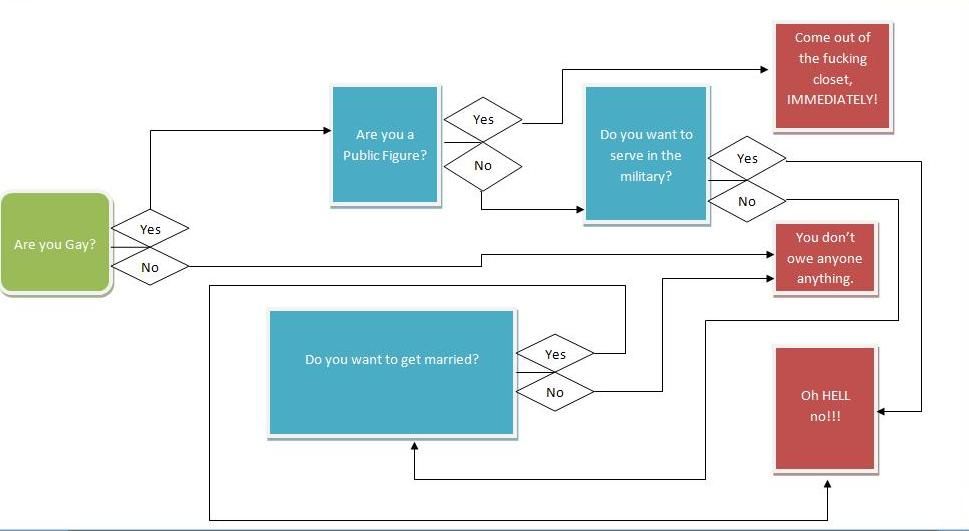
"As a bi-racial cis-gender able-bodied woman in a heterosexual relationship, I may not be able to say I know what it is that Ricky Martin went through before deciding to come out. But I can't help but be struck by the hypocrisy of an America that forbids disclosure from their armed servicepeople and demands it to the point of issuing a frenzied media mandate from everyone else. Whether the criticism was coming from other gay men and women or not, rushing to judge the timing or impact of his decision fails to acknowledge his humanity and undercuts the ownership of his decision."
Just another area where identity politics are tricky, as they intersect with the personal and the political, and above all, a largely straight populace either demands people come out, assume they're already out, or demand they stay closeted based on entirely arbitrary modifiers to the situation. At this point, can we really blame some queer people for deciding they don't necessarily want to play that game?


 Posts
Posts


No comments:
Post a Comment